Hiroshima Japan
Hiroshima Japan
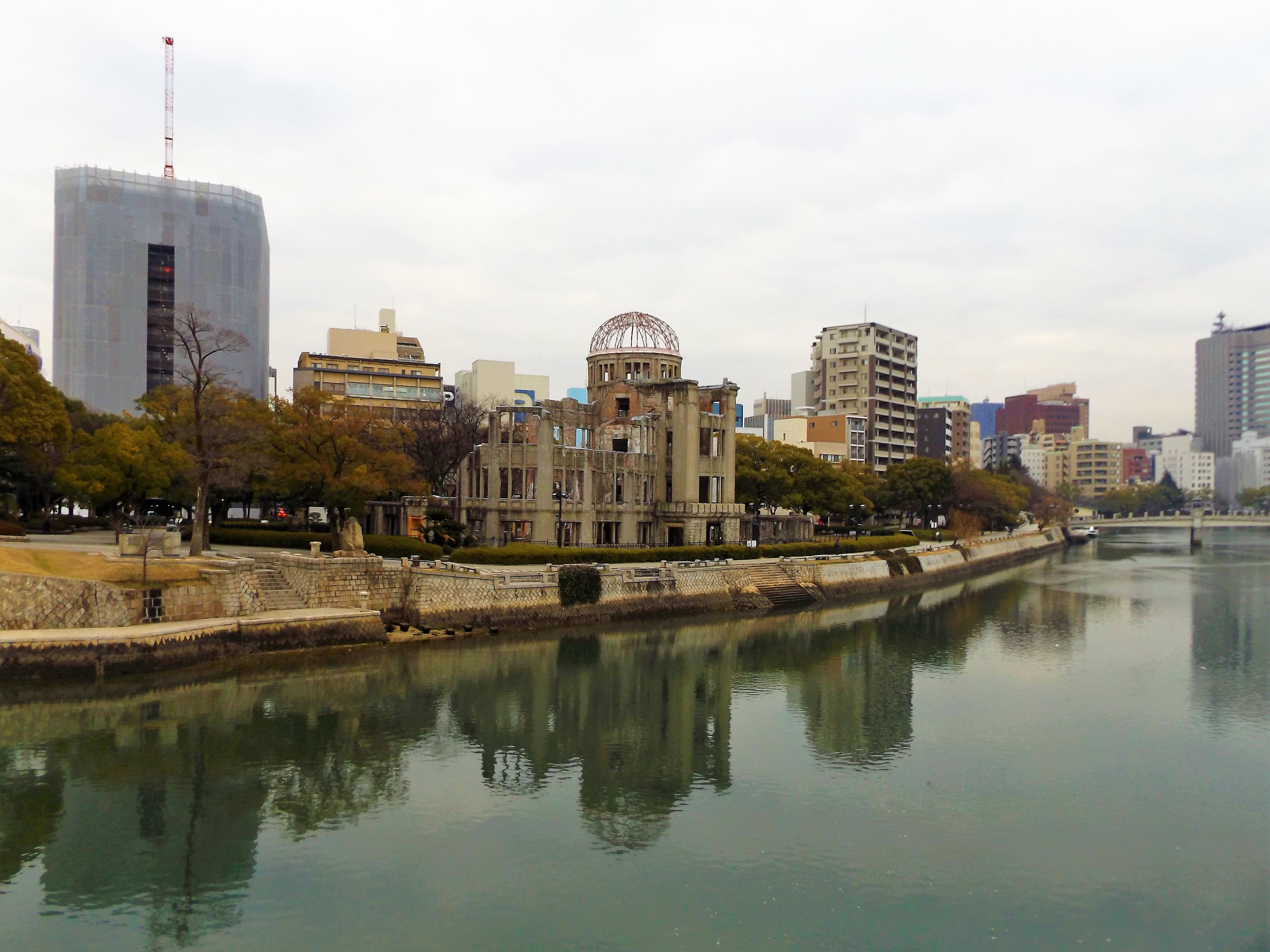
After an 11 hour overnight bus journey from Tokyo we arrived on a cold Tuesday morning in January to Hiroshima station. The first thing we needed to arrange was our onward transport later that day to Kyoto as we are on a tight schedule. As with most things in Japan everything is well organised so we booked our trip for later that afternoon on the Shinkansen or bullet train for 3.15 pm. That meant we had eight hours to explore the city and of course the memorial to the August 6 1945 atomic bomb drop which the city is world-famous for, like it or not. Hiroshima Japan.
Hiroshima Japan. Once Hell on Earth
We stored our bags in the provided lockers at the bus station for a fee of 700 Yen (Nearly 6 Euro) and we were on our way. We headed out onto the chilly streets and sought out the tram service as we were informed it would take us to the iconic A-bomb Dome and Peace Memorial Park. First impressions were good with the mountains in the background providing a beautiful backdrop. City commuters were also making their way across the city but it was a lot less busier than Tokyo with a population of just over one million people. After a short time we found the tram line and map so knew which general direction to go. When the tram pulled up it was full to near capacity but we squeezed on and watched the conductor make announcements, check fares and individually thank everybody who tagged on and off, it was tiring watching it but impressive nonetheless. After about five minutes (cost 160 Yen p/p or 1.20 Euros) we reached the area near the park and immediately I noticed the iconic dome that I had seen and read so much about in school and on TV documentaries.
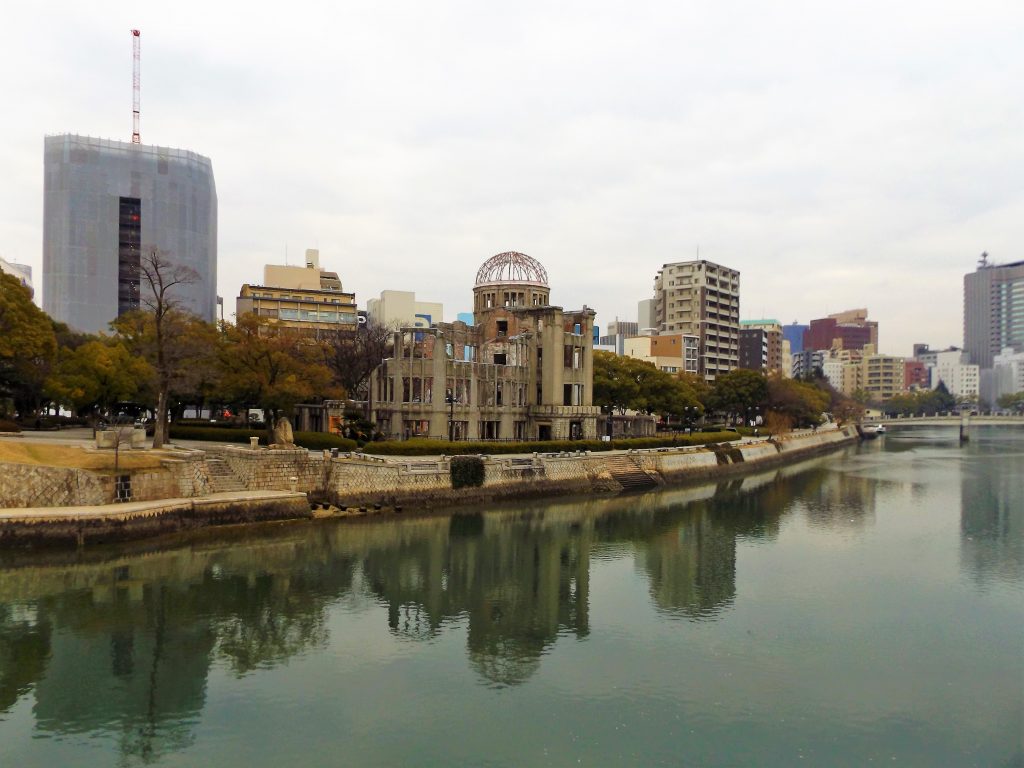
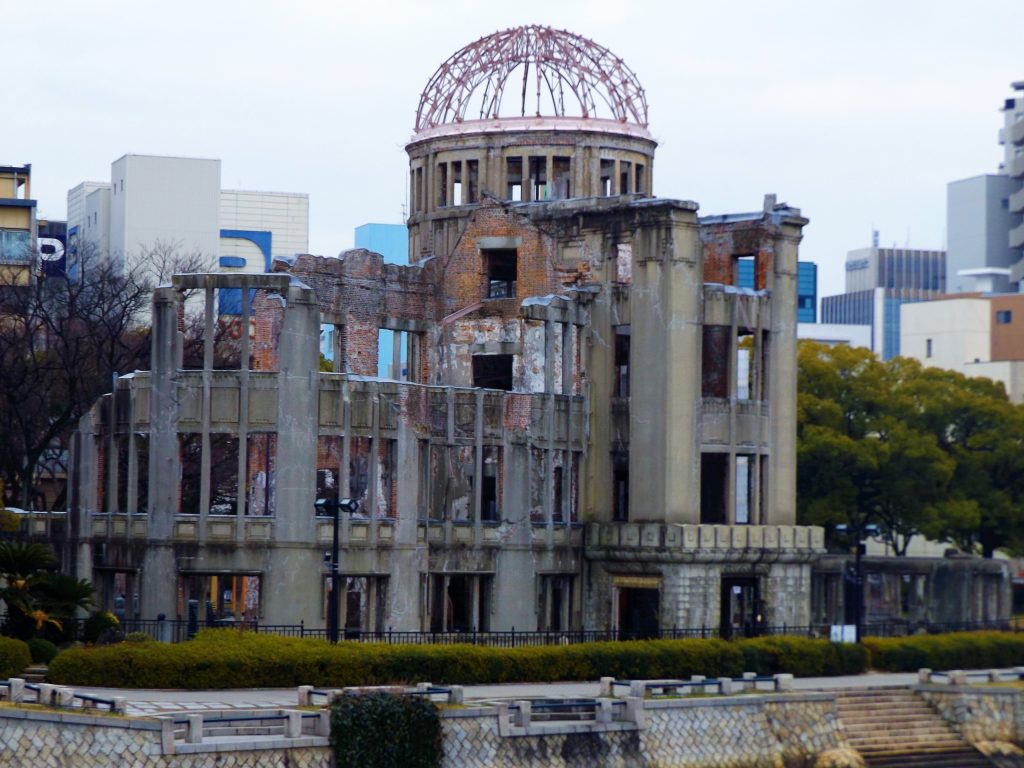
It was hard to believe that just over 70 years ago this city was obliterated and so many lives lost. We walked along the peaceful river front and down to Genbaku Domo and took some pictures. Designed by Czech architect Jan Letzel in 1915, the Hiroshima Prefectural Commercial Exhibition Hall had a bold European style in a grimy, crowded city with few modern flourishes. Because the explosion took place almost directly above the building, the walls remained largely intact, even as the dome shattered and the people inside were killed by the heat of the blast. Initially, as the city rebuilt, it was left alone simply because it was more difficult to demolish than other remains in the area; gradually, the A-Bomb Dome became the symbol it is today. The “Hiroshima Peace Memorial” was declared a UNESCO World Heritage site in 1996 amid some controversy — the United States and China both voted against the nomination for reasons related to the war. Today, the benches around the Dome are a favourite spot for Hiroshima natives to read, eat lunch, or simply relax but at 9am when we visited, was still very empty and peaceful.
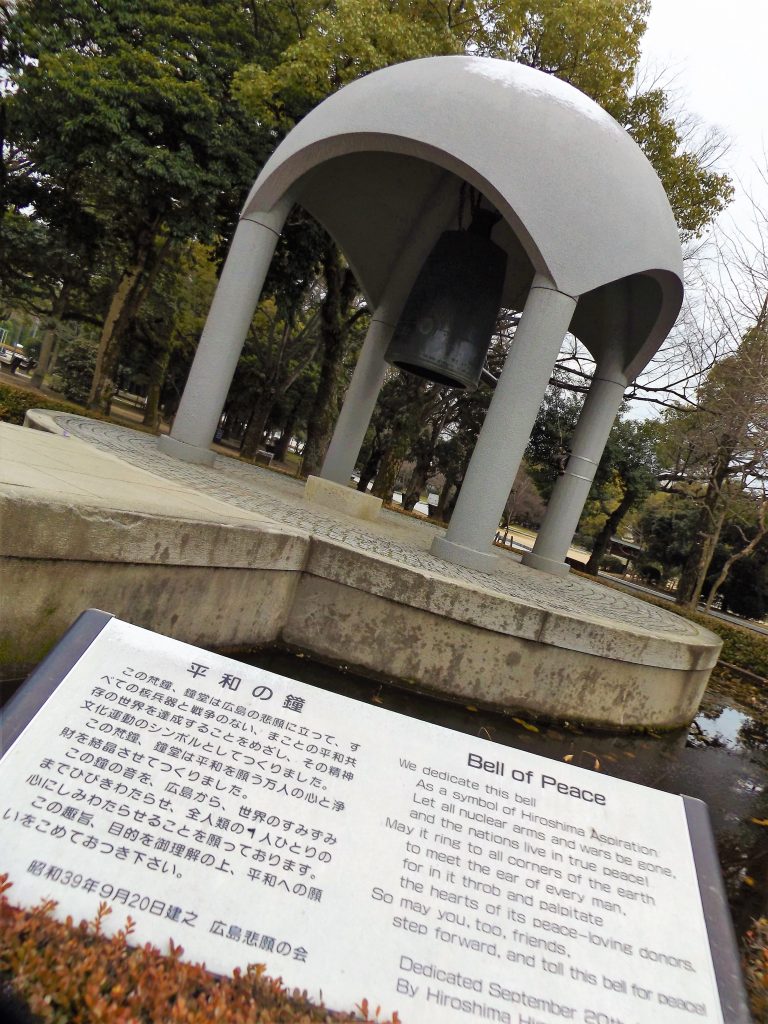
We walked over the T-shaped Aioi Bridge, the intended target of the bomb which has now been restored, passed the The Peace Bell, which I gave a ring of, and down towards more monuments including a poignant structure of a young girl holding an origami paper crane. The story behind it is of Sadako Sasaki a victim of the A bomb, she was apparently healthy until 12 years of age when she developed Leukemia and died. Her classmates felt that a memorial should be erected but as so many children were killed it would be dedicated to all the children of Hiroshima who were victims. After some fund-raising the monument was erected and to this day people still send paper cranes to the city.
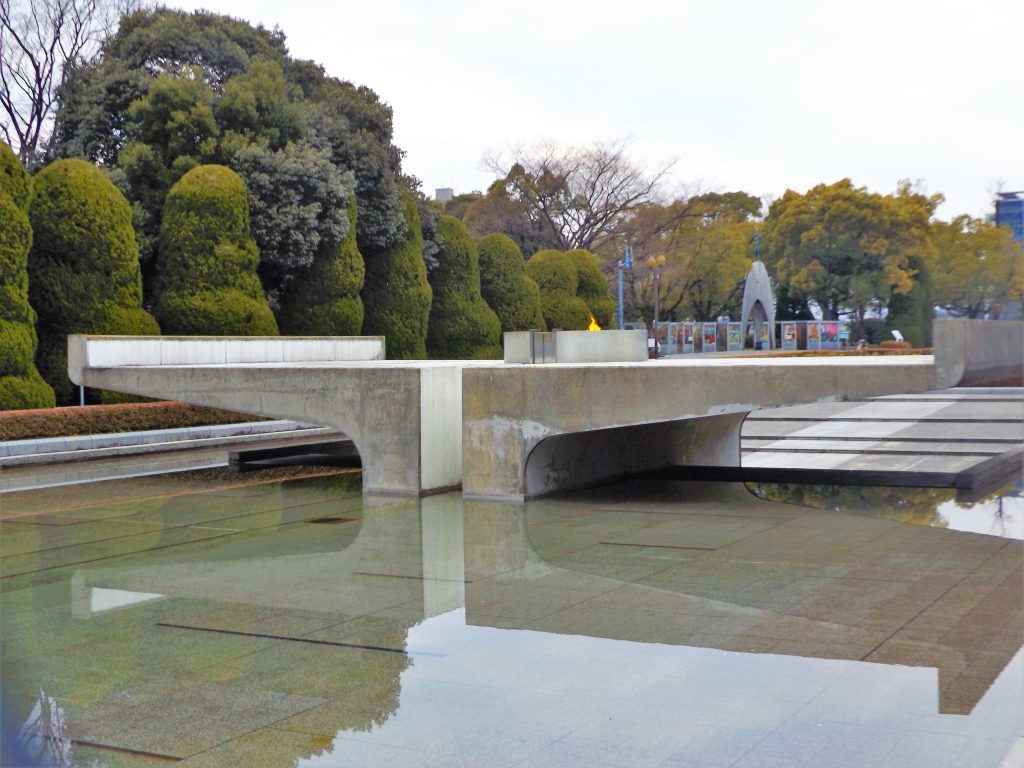
A few hundred yards away is an eternal flame, the Flame of Peace. It is said that the fire will burn until the last nuclear weapon is gone from the earth. A reflective place to pay respects with the dome providing a sombre background. It was then time to visit the Hiroshima Peace Memorial Museum and what a wonderful place it truly is. We have been to many museums around the world and like many tragic ones before, this story is again heart-breaking and the museum really catches your attention. The entrance fee is only 50 Yen per person which is excellent, only about 40 Eurocents meaning it is accessible to everybody, the way a museum should be. It tells the story of the tragic day back in 1945 and shares artefacts from the many victims families. Each picture and artefact shocks you but the sight of burnt skin and a rusted old child’s bike and helmet was very disturbing.
The story was that the victim was a young child and his father buried him in the backyard with the bicycle and helmet. Forty years later the father dug up the yard and buried his son in a family plot before donating the bicycle and helmet to the museum. There are visual documentaries in most languages explaining how the bomb was made and how it wrecked so much havoc. By the end of the tour you cannot leave without feeling sadness and disbelief and with the hope that something like this doesn’t happen again. The real mortality of the atomic bombs that were dropped on Japan will never be known. The destruction and overwhelming chaos made orderly counting impossible.
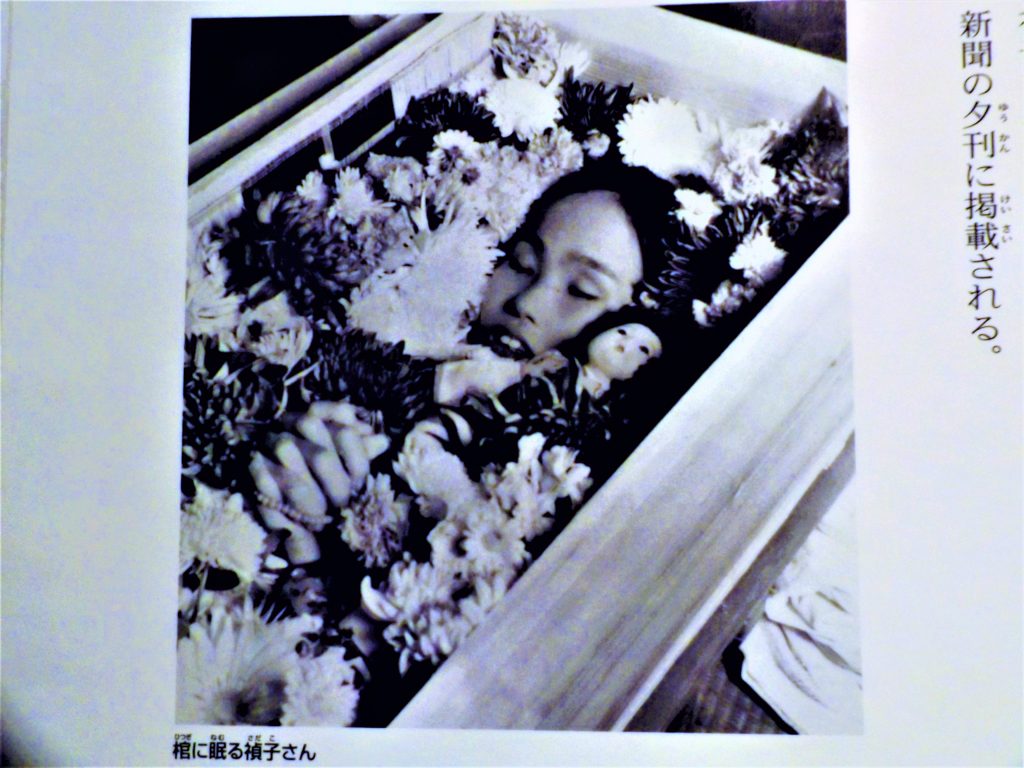
It is not unlikely that the estimates of killed and wounded in Hiroshima (150,000) and Nagasaki (75,000) are over conservative. At no time during the period between 1943 and 1946 were facilities allotted, or time provided, for the Medical Section of the Manhattan Engineer District to prepare a comprehensive history of its activities. Regulations forbade note taking. Official records were scanty. There were few charts and photographs.
The Peace Memorial Museum is a terrific place to show the horrors of that time and a place we feel many young students should come to if possible. No school history books can truly capture how devastating an event this was but seeing the clothes, personal possessions and reading victim’s personal stories and accounts through surviving family members is touching.
Upon exiting the museum there are books showing messages and signatures from famous visitors. As an Irishman it was good to see former President Mary Robinson and the late poet Seamus Heaney leave messages along with former US President Jimmy Carter, from Soviet President Mikhail Gorbachev, Mother Teresa, Yoko Ono and Fiedel Castro to name but a few.
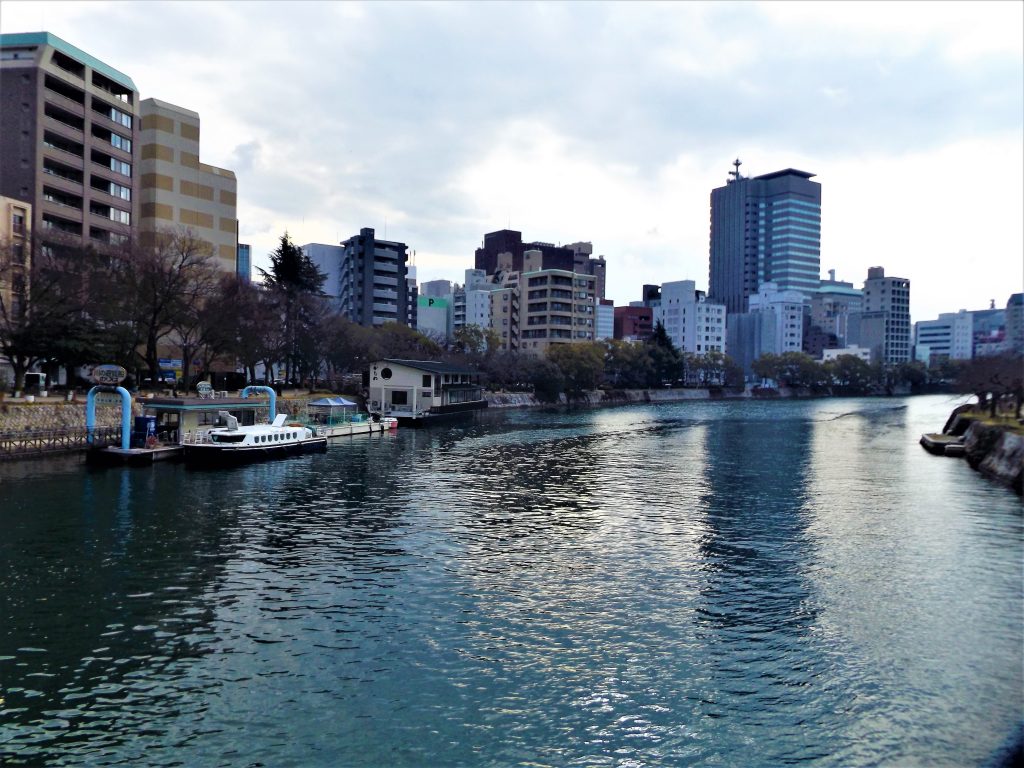
We walked further along the river before making our way back into the city centre for some much-needed warming up and food in Hondōri which is a commercial area in Naka-ku. Hondōri, which means “Main Street”, runs from Hatchōbori to the Hiroshima Peace Memorial Park. Hondōri prospered in the early 20th century, and in 1931, lily-of-the-valley lanterns were installed which allowed shops to stay open late. The entire shopping area along Hondōri was destroyed by the 1945 atomic bombing, due to the blast and fire. Shimomura Jewellers, located in a reinforced concrete building with an iconic clock tower, was severely damaged but like a number of concrete buildings in Hiroshima, it partially survived. The blast causing its side walls to severely tilt over. We took in more of the city before making our way back to the station for our train to Kyoto.
We spent eight hours in the city, a short visit but one we will never forget and one that will live in the memory forever. Hiroshima will always be associated with the events of August 6 1945 but it has come a long way since. It is sad that Hiroshima is on the list of “dark tourism” sites that we wrote about previously Dark Tourism, however the events in August 1945 were the main reason we decided to visit to be honest. Hiroshima also reminded us of another troubled city thousands of kilometres away, Sarajevo, Bosnia and Herzegovina. Crossing the bridges over the river from the peace park seemed eerily familiar with the mountains, trams and disturbing 20th century history all in common. The city’s ability to rebuild physically and emotionally is admirable and we are sure like the oleander the city will continue to flourish despite its dark history. The oleander is the official flower of the city of Hiroshima because it was the first to bloom again after the explosion of the atomic bomb in 1945.
Further interesting reading: http://www.history.com/news/the-man-who-survived-two-atomic-bombs
Hiroshima Japan