Havana Travel Guide: Things to Do in Cuba
Havana Travel Guide: Things to Do in Cuba
Havana is one of those cities that almost everyone has heard of, yet few truly know what to expect before arriving. Famous for its classic American cars, colourful streets, revolutionary history and Cuban cigars, the capital of Cuba offers a travel experience unlike anywhere else in the Caribbean. Here’s what we discovered during our four days exploring Havana.
Arriving in Havana
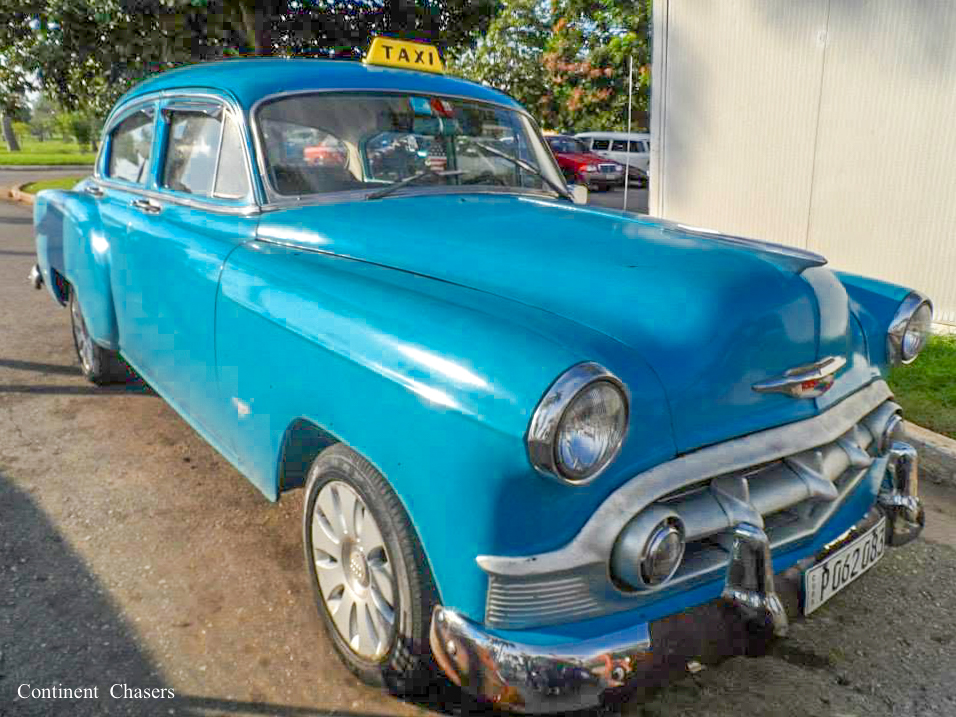
Upon arrival at Havana airport there are throngs of people awaiting relatives, friends and a chance to make some money as you exit the airport. The warm air hits you like a heavyweight Cuban boxer, before we thankfully got into our taxi driven by our pre-arranged transport. Immediately we saw the classic old American cars from the 1950’s that you see in all Cuban images, however, our taxi was a “modern” 1990 Mercedes Benz with a cracked driver’s windscreen and no seat belts!!! We made our way towards Havana and soaked up all we could see including the traffic fumes for which there is an abundance of, definitely no NCT (National Car test) here, and if there was I don’t think there would be a car left on the roads. The heat is another thing that really hit us, it was exceptionally hot. Cancun felt like a Baltic winter compared to this, it was sweltering!!!
Staying in a Casa Particular
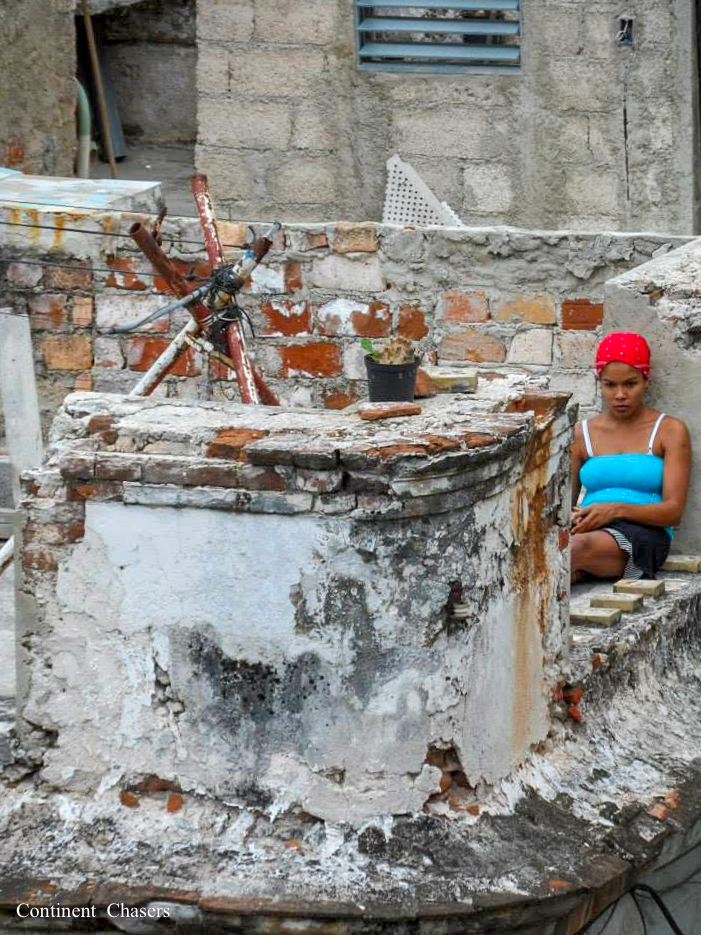
We paid approximately 25 CUC for the taxi journey to our lodgings in Centro Habana which is 25 dollars. The peso convertible is the official currency here which we had to obtain at the airport. It is lined with the dollar so you pay more as a tourist for everything that a local would. The locals use their own regular Cuban Peso which has a much lower value. As we entered Centro Habana it can appear a little shocking if you come from Europe or North America, the pavements and streets are in terrible condition, there is rubbish strewn around everywhere, excrement on the pavements, and most of the buildings look like they have been just hit by an earthquake. Our hosts Denis and Martha were on the second floor of a building in Centro Habana and they were most welcoming from our arrival. From what we could see there are two options for lodgings in Havana, hotel or private house (Casas Particulares). If you want the real Cuban experience we suggest staying in a private house. Here you will stay with a local family, learn some Spanish and if you wish, eat home cooked meals.
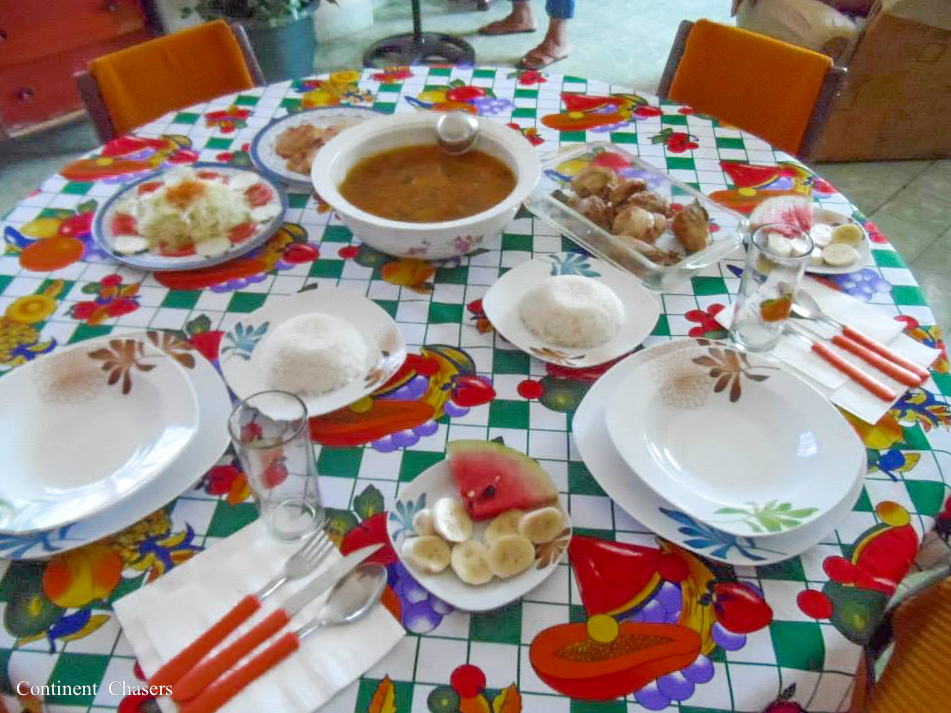
We opted to have breakfast and dinner each day for a small fee and it is definitely a must. Martha was an excellent cook and you get to taste the amazing local fruits available here like mango and pineapple, Paula also assures me the local coffee is a must try but it is very strong. The Casa Particulares are marked with a white sign a blue anchor like symbol with Arrendador Inscripto written across, owners do make some money with some going to the government.
Exploring Old Havana
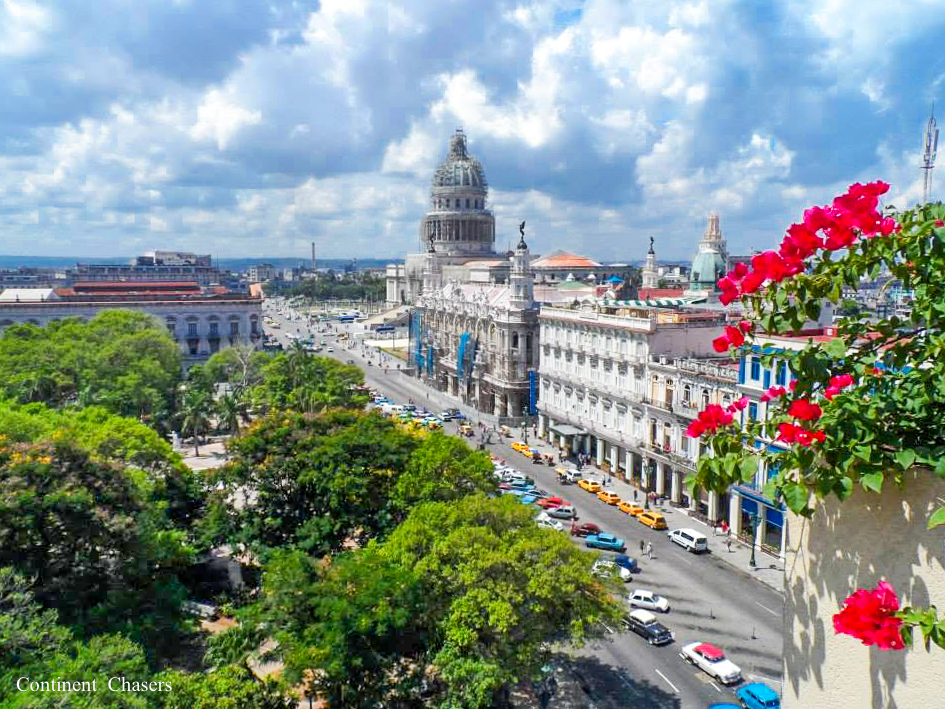
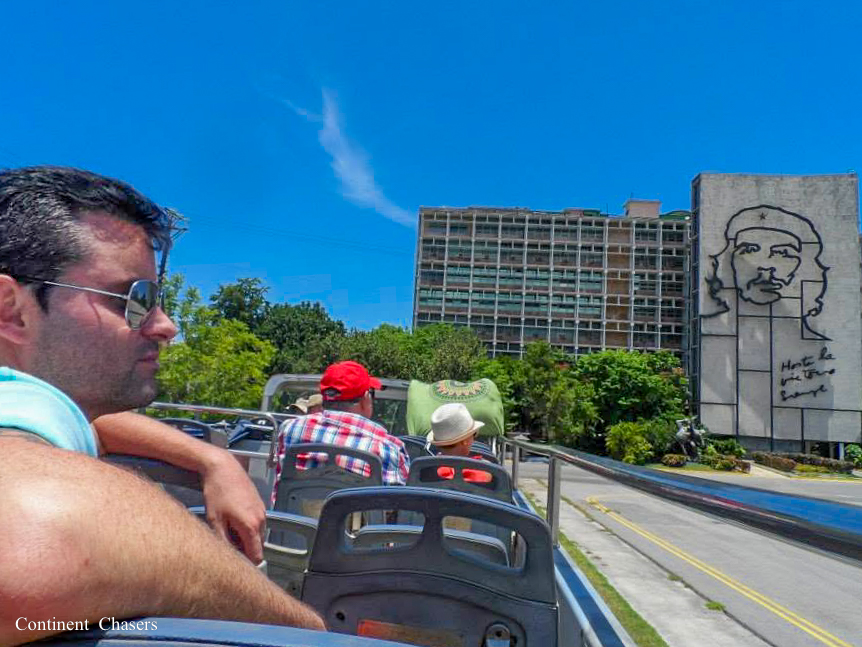
After settling in and receiving our free map and Cuban cigars we decided to walk the 10 minute walk into old Havana, as we expected we received some lingering stares, especially by men towards Paula, but for the most part people are just curious and create no hostility. As a foreign traveller you do stand out, so be prepared for the usual Taxi requests and people approaching you to find out where you are from? The following day the trend continued with people approaching us to find out where we are going and giving us advice on where to go, but we know that really they want a way of making some money from you. Best way to deal with this is to smile and keep walking or just say no thanks, for the most part they usually leave you alone. We decided to jump on the hop on hop off bus to see all of the city. The bus is very reasonable at 5 CUC each with a little commentary about some of the more interesting places, again be very careful if you are on top of the bus as the sun is incredibly strong and just a few minutes can lead to strong sunburn, so you have been warned.
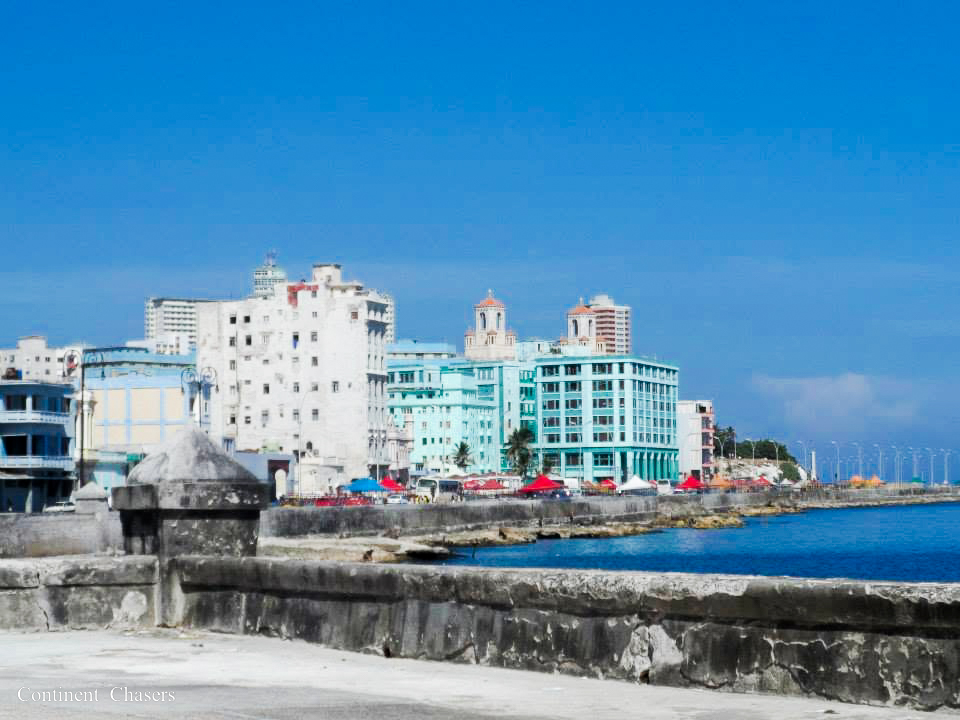
We saw such sights as New Havana, Habana Vieja, Museo de a Revolucion and Plaza de la Revolucion. In Habana Vieja you can see the landmark “El Capitolio” which was the seat of government until after the Cuban revolution in 1959 and is now home to the Cuban academy of sciences, currently it is being renovated for use by the Cuban National assembly as per reports (August 2014). From here you can walk the backstreets and purchase souvenirs and move onto the beautiful Malecón where you can take in the sea air and just relax. It was again while sitting here that we were approached by curious locals asking where we were from and wanting to take us somewhere, after politely refusing they moved on, but it can be a pain.
Overall we both really enjoyed Havana, it is not a place for all though. If you enjoy your home comforts and are not the adventurous type, then maybe Havana is not for you. At night street lighting is very poor and the pavements are not in the best of shape, so be careful. This dim light can give an impression of danger at night but the streets are quite safe and people seem quite happy to see tourists in our opinion. Many people will approach you and ask where are you from, as stated above, but it’s usually harmless. We felt that our four days were plenty in Havana, and if you have longer time its best to get out and see the country. While we were here we saw no internet access but perhaps we did not look hard enough, nobody is on mobile (cell) phones sipping on a Starbucks, and there is no 9 – 5 lifestyle, this is what makes Havana so unique. People just live life day-to-day watching the world go by from their front porches chatting to their neighbours. Havana is a must see destination and you are guaranteed some unique photographs, even the heat becomes bearable after a while!!!
Havana Cuba
Tips for Visiting Havana
Any remaining currency must be exchanged at the airport as it is worthless outside Cuba. Expect to lose out on the exchange rate. A departure tax of 25 CUC is in place per person so approximately 25 dollars, this cannot be negotiated and your airline ticket will be stamped as proof of payment. Moreover, many countries require a visa before entry so we pre-arranged our visas with the Cuban Embassy in Dublin.
Final Thoughts
Havana won’t be everyone’s idea of the perfect city break, but that’s exactly what makes it so memorable. From its colourful streets and classic American cars to its fascinating history and welcoming people, it’s a destination unlike anywhere else we’ve visited. Four days gave us a great introduction, but we’d happily return to explore more of Cuba beyond the capital.
Havana Travel Guide: Things to Do in Cuba
*Currency:
At the time of our visit, Cuba used the Convertible Peso (CUC), which has since been replaced by the Cuban Peso (CUP).


* Departure Tax:
This is no longer charged separately.
Most Romantic Destinations for Couples (From Our Travels Over the Years)